

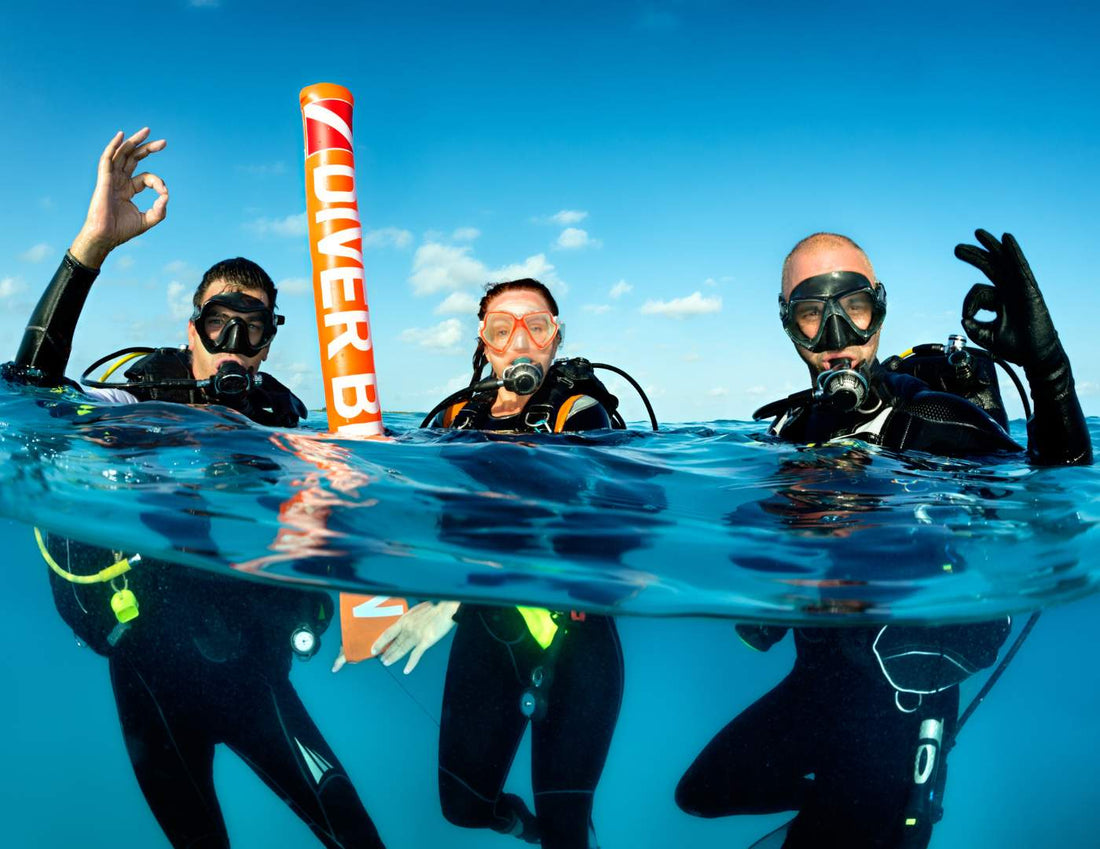
What license do you need to scuba diving?
Namubak Clothing
Diving is not just about submerging yourself. It's about opening a door to another world.
But before doing so, many wonder: What license do you need to dive?
The answer is simpler than it seems, and in this blog we're going to explain everything you need to know to get started with security, confidence, and purpose.
What license do you need to dive for the first time?
If you've never dived before, most people start with the PADI Open Water Diver course.
This is the most recognized certification in the world and allows you to dive to a depth of up to 18 meters with a certified partner.
There are other organizations like SSI or NAUI , but PADI is the most common, especially in destinations like Costa Rica.
License or certification?
Technically, what you get is a certification .
It is not a government “license”, but a document that proves you have completed the training and can dive safely.
Is certification mandatory for diving?
Yes. While there are limited experiences called "Discover Scuba," you cannot dive freely without official certification. Furthermore , responsible dive centers will not allow you to participate in dives without it.
What license do you need to dive in Costa Rica?
In Costa Rica, there is no specific government regulation, but all reputable dive centers require valid certification such as PADI or SSI.
To dive in places like Isla del Caño , Playas del Coco or the Bat Islands , you need at least your Open Water certification.
At Namubak we offer the Open Water course in collaboration with The Clean Wave and BA Divers, with real practical training in the Costa Rican Pacific.
How much does it cost to get a diving license?
Prices vary depending on the country and the dive center.
- In Europe or the US it can cost between $650 and $800 .
- In Asia, between $350 and $500 .
- In Costa Rica, the average is around $500 to $700.
Namubak's Open Water course includes digital materials, theory classes, and five guided open water dives. View diving course

What steps should be followed to obtain it?
- Theoretical course online or in person
You will learn about equipment, safety, basic diving physics, and emergency techniques. - Sessions in a swimming pool or confined water
You practice skills such as equalizing, cleaning your mask, or sharing air with a partner. - Open water dives
You do four dives in the sea to apply what you've learned. That's where the magic really begins. - Final evaluation
A theoretical test and practical validation certify you as an Open Water diver.
You can also read: How to start diving from scratch
Which diving license is best for you?
If you're looking for something internationally recognized, accessible, and with a great community, PADI Open Water is the best option.
It is valid for life and opens the door to thousands of diving centers around the world.
Other systems like SSI are also valid and accepted, but if you want to start with the safest option, PADI is the way to go. You can learn more about all the current levels of scuba diving certification .
Is it worth getting a diving license?
Absolutely.
Not only do you learn to move safely underwater, but you also open up the possibility of exploring reefs, shipwrecks, manta rays, sharks, and an ecosystem full of life.
Furthermore, if you do it with purpose —as we promote at Namubak— each dive becomes a way to connect with nature and protect it.
Diving with purpose starts with preparing yourself well
Now that you know what license you need to dive , you understand that getting certified is not just a requirement, but a way to take care of your safety, protect marine ecosystems, and dive responsibly.
Starting with a recognized certification like PADI Open Water opens the door to unforgettable experiences around the world, including the most spectacular corners of Costa Rica.
If you're considering taking that first step, we recommend exploring our Open Water diving course in Costa Rica , developed in collaboration with certified instructors and organizations working for ocean conservation.
Getting a good education is the first act of respect towards the sea.